Humanity May Reach Singularity Within Just 7 Years, Trend Shows

In the world of artificial intelligence, the idea of “singularity” looms large. This slippery concept describes the moment AI exceeds beyond human control and rapidly transforms society. The tricky thing about AI singularity (and why it borrows terminology from black hole physics) is that it’s enormously difficult to predict where it begins and nearly impossible to know what’s beyond this technological “event horizon.”

h/t DM

Share

The Coming “Symbolic Analyst” Meltdown

James Pethokoukis asks, “Does ChatGPT mean the Technological Singularity is near? How would we know?”

To answer the second question first, we probably wouldn’t. One of the characteristics of a singularity is that you can’t tell when you’re entering it. (And by the time you figure things out, it’s too late.) But looking at Chat GPT and the various AI Art programs that are appearing, I can’t help but see an irony: The jobs that are coming under attack first are the jobs that up to now have resisted technological replacement.

Share

Rogue AI ‘could kill everyone’

A rogue artificial intelligence system could kill everyone and the technology must be regulated in a similar way to nuclear weapons, MPs have been told.

Researchers from Oxford University told the science and technology committee that AI could eventually pose an “existential threat” to humanity. Just as humans wiped out the dodo, the machines might eradicate us, they said.

Share

‘Consciousness’ in Robots Was Once Taboo. Now It’s the Last Word.

The pursuit of artificial awareness may be humankind’s next moonshot. But it comes with a slurry of difficult questions.

Hod Lipson, a mechanical engineer who directs the Creative Machines Lab at Columbia University, has shaped most of his career around what some people in his industry have called the c-word.

On a sunny morning this past October, the Israeli-born roboticist sat behind a table in his lab and explained himself. “This topic was taboo,” he said, a grin exposing a slight gap between his front teeth. “We were almost forbidden from talking about it — ‘Don’t talk about the c-word; you won’t get tenure’ — so in the beginning I had to disguise it, like it was something else.”

Share

ChatGPT Is Seriously Woke A.I.

If we have any hope of retaining our tenuous grasp on reality rather than drowning in a maelstrom of ideological disinformation, our window to wake up is closing fast.

After playing around with ChatGPT, the artificial intelligence chatbot making waves for its potential to disrupt education by writing students’ term papers for them, I realized this machine was not exactly unbiased in its political leanings. Its biases, predictably, went in the same direction virtually all Silicon Valley biases tend to go.

After a few quick Google searches—but who knows what additional information Google was keeping from me?—I stumbled on an article from Unherd fittingly titled “ChatGPT is not politically neutral.” 

Share

Even AI Is Suspicious Of The Military-Industrial Complex

In my eclectic reading, I came across a couple of references to ChatGPT, an experiment in artificial intelligence (AI). You ask the AI bot a question, or give it a task, and it spits out an answer, and I must say a pretty good one judging from the task I gave it.

My task to the AI bot: “Write a critical essay on the military-industrial complex.”

Share

Ukraine is outflanking Russia with ammunition from Big Tech

Artificial intelligence is changing modern conflict and this war is the front line

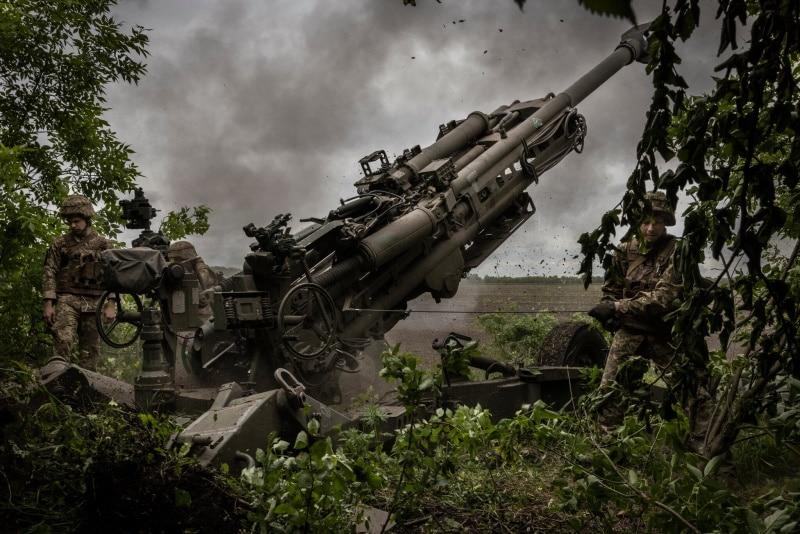
Ukrainian soldiers have revolutionized the way battles will be fought in the 21st century by waging an “algorithmic war” that enables Kyiv to outgun invading forces with far fewer troops.
Artificial Intelligence developed by companies in the West has given Ukraine a technological edge over Russia, military experts said, turning the tide of the war.

Artillery continues to dominate the war in a way that would be familiar to generals fighting battles centuries ago. However, the accuracy, speed and deadliness of Ukrainian strikes has dramatically increased thanks to software developed by Palantir, a US tech firm co-founded by the Republican billionaire Peter Thiel.

Share

A Computer Can Now Write Your College Essay — Maybe Better Than You Can

We fed ChatGPT, OpenAI’s new natural language tool, college essay questions for the 2022-2023 academic year. Here’s what it wrote.

OpenAI debuted its latest language model, called ChatGPT, to the public last week. With a simple log in, anyone can talk to the AI for free, and, unlike its predecessor InstructGPT, ChatGPT can answer follow-up questions, admit mistakes, reject inappropriate requests and challenge inaccuracies. The buzzy new AI has already inspired a flurry of articles about what it can—and can’t—do, from creating a new language for slime beings called Glorp, to detecting vulnerabilities in code, to writing a biblical verse about how to remove a peanut butter sandwich from a VCR.

Share