
A synagogue in the Belgian city of Liège was damaged in an explosion in the early hours of Monday, police have said.
The blast happened at around 04:00 local time (03:00 GMT) in front of the synagogue and damaged windows across the street but caused no injuries, according to officers.
Willy Demeyer, the city’s mayor, called the incident “an antisemitic act”, while Prime Minister Bart De Wever said later on social media: “We stand in solidarity with the Jewish community.”
Related – Police release images of Oslo US embassy explosion suspect
As hundreds of thousands of tourists in the Middle East wait anxiously for news of scant repatriation flights, a smaller group of ultra-wealthy people have sought a more exclusive way out: private jets.
In four days last week SHY Aviation fielded some 200 requests for 700 people in the Middle East to charter its planes, which carry up to 12 passengers. Overall, the company estimates, some 30,000 people have tried to evacuate the area by private jets hired through SHY or its rivals.
An Iranian Kurdish militia leader said Donald Trump would not be able to topple Tehran’s regime without their help.
Rebaz Sharifi, a military commander with the Kurdistan Freedom Party (PAK), an Iranian separatist group based in northern Iraq, said he was confident the US would back them for an eventual ground invasion of Iran.
He also claimed there were 10,000 fighters ready to invade once given the order.
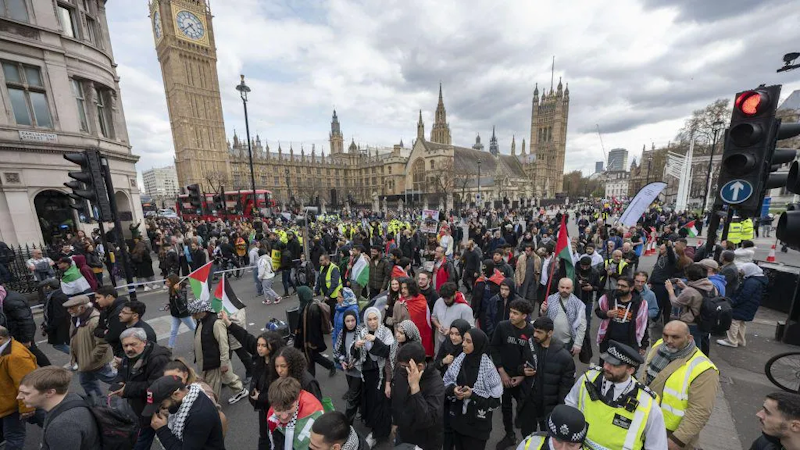
This is the ironic moment women’s rights activists swore and jeered at demonstrators protesting the Iranian regime – a government notorious for decades of oppressing women.
Shocking footage from today’s central London protest shows a woman in Trafalgar Square shouting ‘f*** you’ at anti-Iranian regime protesters and flashing her middle finger while holding a sign that read ‘Women Against the Far-Right.’
Further clips show other activists raising placards and jeering at the demonstrators, with one woman giving a thumbs down while holding a sign that ironically read, ‘Tear Down the Sexist System.’
US marines help Iraqi civilians pull down a statue of Saddam Hussein
This is the third Gulf war and umpteenth outbreak of conflict since the United States took over as the dominant power and influence in the Middle East at the end of the cold war. And it is arguably the most dangerous, consequential and confused of them all.
The destruction and chaos spreading across the region confirms the Middle East’s status as the world’s pre-eminent crisis factory, but it also raises questions as to how US presidents so often declare they are ending US interference in the region, only to be lured back in.
Since the second world war the US has set out to oust a government in the Middle East on average once a decade, and on almost every occasion it has left the country, and the US, worse off as unexpected consequences eventually emerge. As Donald Trump embarks on yet another regime change – this time in Iran, a country of 90 million people – the sense of foreboding is profound. Already the timelines are extending, and the sense is growing by the day that Trump is gambling with the fate of a country about which he knows next to nothing.
Everyone is counting Iran’s missiles. They are counting the wrong thing.
The number that determines the outcome of this war is not 2,000 or 2,500 or 3,000. Those are pre-war missile inventory estimates and they are now largely irrelevant. The number that determines the outcome… https://t.co/cgJ7yHJLwfpic.twitter.com/45jw3JbTsc
— Shanaka Anslem Perera ⚡ (@shanaka86) March 6, 2026
It’s the Guardian but worth a look assuming you’ve had your rabies shot.
In a row of small Yonge Street storefronts, Million Exchange angles for a corner of a booming market.
“Instant buying and selling of digital currencies,” it promises on its website, though the shop is not in the federal registry of authorized crypto businesses. Registration is a requirement meant to deter money laundering and terrorist financing.
Over the last year and a half, more than $200 million worth of digital currencies has moved through a virtual wallet used by Million Exchange.
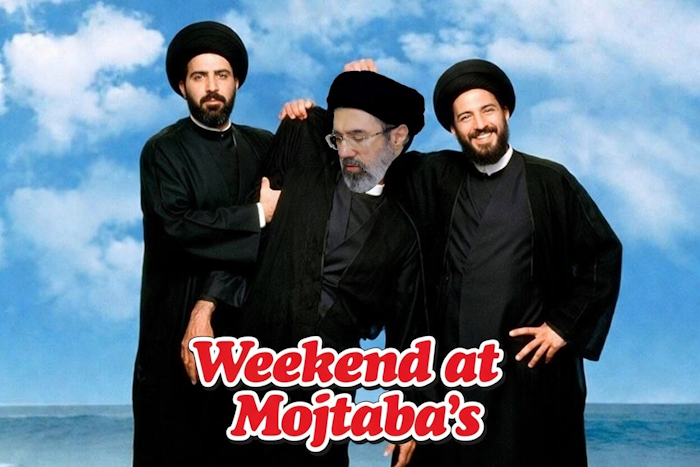
Mojtaba Khamenei, the son of Iran’s Ayatollah Ali Khamenei who was killed in US-Israeli strikes, has been chosen as his successor.
Unlike his father, the 56-year-old has largely kept a low profile. He has never held government office, nor given public speeches or interviews, and only a limited number of photos and videos of him have ever been published.
But for years there have been rumours that he held considerable influence behind the scenes in Iran.
I am becoming rather fond of Prime Minister Starmer’s major foreign policy announcements. In early January, after US forces swooped into Venezuela and took President Maduro to New York to face trial, Keir Starmer was keen to get straight out in front of the cameras. There he said that he wanted to stress that ‘the UK was not involved in any way in this operation’. As though the whole world had been expecting to hear that the British armed forces were indeed central in snatching the narco-terrorist from Caracas.
This week it was again Starmer’s turn to stand behind a podium, British flags behind him, and deliver another statement that absolutely no one thought necessary. Speaking about the US-led strikes on Iran, he announced solemnly: ‘I want to set out our response.’ What could it be? The world wondered. ‘The United Kingdom played no role in these strikes,’ he declared.
US President Donald J. Trump’s decision to launch his devastating military campaign against Iran’s ayatollahs means that countries, such as Turkey and Qatar, which have previously been ambivalent about their attitude towards Tehran, will now need to undertake a serious reappraisal of where their true interests lie.
Prior to Trump launching “Operation Epic Fury”, the military campaign designed to eliminate Iran’s ability to produce nuclear weapons, ballistic missiles or support its proxies once and for all, several important regional players sought to remain neutral as the tensions deepened between Washington and Tehran over Iran’s nuclear programme.
President Donald Trump is weighing options that could include deploying special operations forces into Iran to secure or destroy highly enriched uranium stockpiles as part of his pledge that Tehran “will not have a nuclear bomb,” according to multiple reports Saturday.
Relations between the United States have been rather strained as of late, shall we say. The latest kerfuffle came about when Prime Minister Keir Starmer refused to let us use Britain’s airbases during Operation Epic Fury.
Iran’s clerics have chosen a new supreme leader, eight days after the death of Ali Khamenei.
The identity of the new leader has not been revealed, hinting at both fears of assassination and internal dispute in the floundering regime.
“This candidate has been reported to the leadership board of the Assembly of Experts and has been verified,” Amirreza Hedayati, representative of Khuzestan province in the Assembly of Experts.
Conservative Leader Pierre Poilievre says U.S. military intervention in Venezuela and Iran is part of a broader strategy to counter China’s reach around the globe.
Poilievre said Canada must decide how it fits into the American strategy and suggested strengthening ties with its southern neighbour for Canada’s economic and security benefit. He made the comments during a March 4 appearance on the Triggernometry podcast while visiting the U.K.
The Elite have Betrayed the People – Canada’s Opposition Leader, @PierrePoilievre
A small group protesting the war in Iran near the United States Consulate in downtown Toronto on Saturday was met with pro-Shah demonstrators who support regime change in the country.
The afternoon rally appeared to be peaceful after Toronto Police set up barriers on the east side of University Ave., north of Queen St. W., to keep both groups apart, according to a livestream of the event.
When Hamid heard news of the death of Iran’s Supreme Leader Ayatollah Ali Khamenei a week ago today, he felt a wave of euphoria and took his wife and daughter into the street outside his home in Tehran to celebrate.
For the next few days, as US and Israeli bombs slammed into buildings across the capital, the family went onto the roof of the house to watch the airstrikes coming in, cheering every time a regime target was hit.
“Try to find anywhere else on this earth where the population would be happy with an external attack on their country,” he told me, via a cousin in the UK.