‘It’s Not A Chess Game, It’s Pure Madness’: Residents Near Russian-Controlled Nuclear Plant In Ukraine Fear Catastrophe

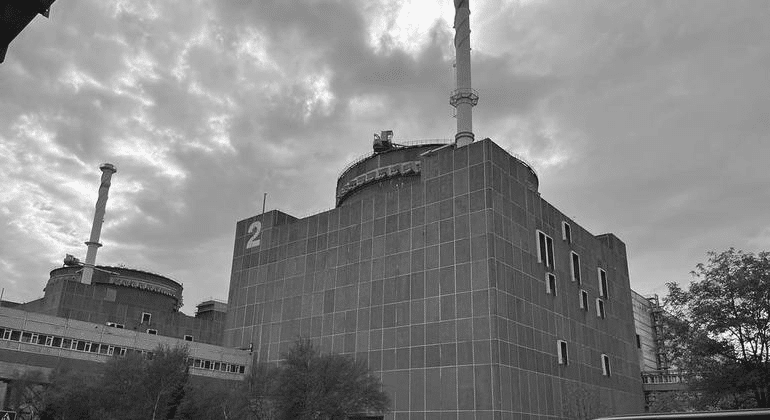
NIKOPOL, Ukraine — The vast windows of Yevhen Yevtushenko’s Soviet-era office overlook Europe’s largest nuclear power plant. Its round cooling towers stand less than 10 kilometers away, across a broad stretch of the Dnieper River that is now almost dry after a disastrous dam breach downstream.

A tough-looking man with a bushy beard, an air of mild irritation, and a pistol strung on his belt, Yevtushenko, who heads the Nikopol District Military Administration, offered his assessment of the chances of a nuclear disaster. “I do think it is very probable,” he told RFE/RL on July 3.


Nuclear Falseflag on Zaporozhye NPP Heats Up + Major Wagner Updates and More

The situation can only be considered urgent as Ukraine has now made their full intentions crystal clear. If before we suspected with high confidence, now it is plain fact. They intend to destroy the ZNPP plant as a last ditch attempt to ‘activate NATO’ by blaming Russia.

A completely coordinated campaign over the last few days has affirmed this. Not only was Budanov’s maiden speech after reappearing from his Kalibrated cranial trepanation centered on Russia’s alleged ‘mining of the ZNPP’ basement, but now several new instances of highly coordinated messaging have been released by Ukraine and its Western controllers.


SITREP 7/4/23: Final Hour of Zelensky’s Terror Ploy

The most exigent matter on the table is once again the brewing Zaporozhye plant showdown. It’s now believed by some that Zelensky is planning to carry out the ZNPP falseflag in the next few days on the eve of the big NATO summit in Vilnius, which is on July 12. The purpose would be to galvanize the NATO members and shape the entire policy discussion of the summit around Ukraine and the “nuclear disaster”.

Share

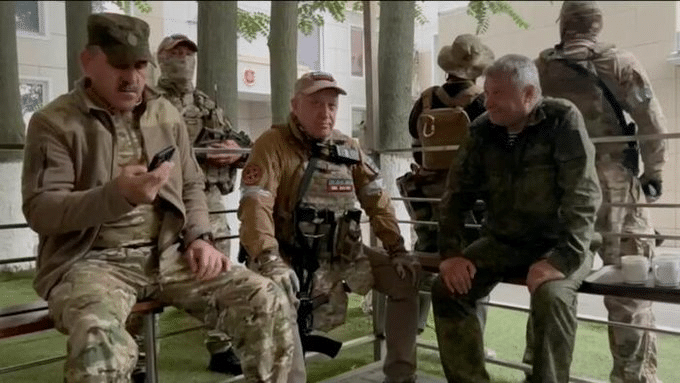
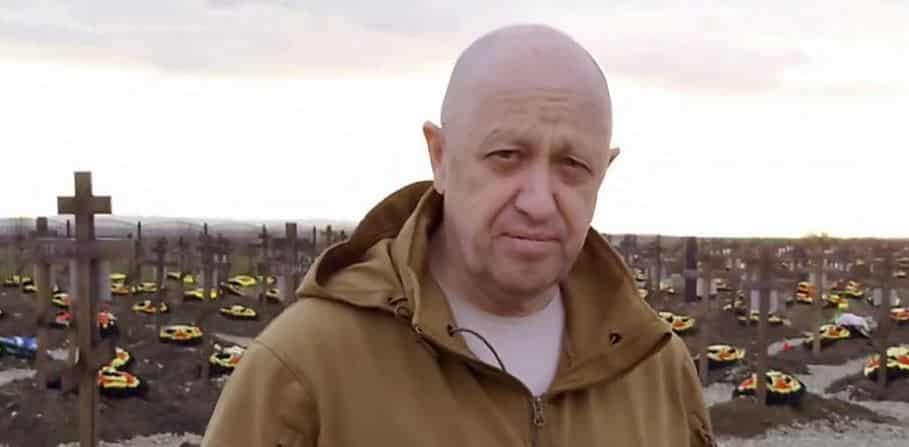
Yevgeny Prigozhin says Wagner will return to the front soon

Yevgeny Prigozhin, head of the Wagner mercenary group, has vowed that his fighters will soon enjoy “new victories,” as Russia said it had shot down suspected Ukrainian drones near Moscow.

Prigozhin’s comments were his first for a week and came as his approval ratings plummeted among Russians because of his aborted mutiny against Moscow on June 24.

Share

Inside a partisan group fighting Ukraine’s counteroffensive behind enemy lines

Hunted tirelessly by Putin’s men, their work is dangerous and secret. Now is their time to speak

Sidling through the door of the Russian military recruitment centre in occupied Donetsk, Dmitri was glad to have the summer sun to blame for the nervous sweat on the back of his neck.

He was barely old enough to vote, yet this was already the second time Dmitri would swear allegiance to a flag. His handler in Ukrainian military intelligence was waiting with bated breath to discover whether their ruse would dupe President Putin’s forces.

Share

Majority of Canadians fear Ukraine war will go nuclear, but don’t want to give in to Russia: poll

Nearly a year-and-a-half since Russia’s invasion of Ukraine, the majority of Canadians fear the conflict could go nuclear — but want a Western-backed Ukraine to press on against Russian aggression.

New numbers released last week in a Maru Public Opinion poll suggests 63 per cent of Canadians are watching news of the war closely, with 43 per cent of respondents believing the conflict is deadlocked.

Share

Wagner: Russians reflect on group’s advance towards Moscow

Wagner troops enroute to Moscow

A week on from the dramatic mutiny by Wagner forces, residents in Rostov-on-Don – the city the mercenary troops seized – have been reflecting on the events that rocked Russia.

In just 24 hours, leader of the Wagner group, Yevgeny Prigozhin, staged an insurrection, sending troops into the city of a million people and further on towards Moscow.

Due to the current laws against criticising the so-called “special military operation” in Russia, the BBC has chosen to protect the identities of the citizens who spoke to us.

Share

Uber Woke Ben & Jerry’s Owner Unilever named Russia war sponsor by Ukrainian government

Unilever, the food giant that prides itself on its “social purpose”, has been named “an international sponsor of war” by the Ukrainian government.

The company, which owns Marmite, Hellmann’s mayonnaise and Dove, was accused by Ukrainian veterans of “contributing hundreds of millions in tax revenues to a state which is killing civilians”.


Ben & Jerry’s Canadian Home Page has a link to a “Land Back” Screed by a big backer of the fake graves genocide.

Share

Why Germany’s Catholics turn their back on the church

Germany’s Catholic Church is in shock following this week’s report on the record number of people leaving it: Altogether 522,821 Catholics left their church in 2022, according to the German Bishops’ Conference. That’s an increase of more than 45% over 2021 and a figure that fits with the mounting criticism of the church’s sluggish reform process, over which many bishops don’t see eye to eye. And there’s no sign that the membership decline is going to slow, let alone reverse.

Share

Ukraine says no negotiations unless Russia retreats from Crimea

Ukraine will only negotiate a peace deal with Russia once the Kremlin’s armies have fully retreated from Donbas and Crimea, Volodymyr Zelensky has said.

His comments scotched suggestions that Ukraine may look for peace talks if its counteroffensive pushes Russian forces back to the border of occupied Crimea.

“The borders of February 24 2022 are not our borders. That was the contact line between us and the occupiers,” Mr Zelensky said in comments made as Pedro Sanchez, Spain’s prime minister, visited Kyiv.

Share

Dodging shells on Ukraine’s eastern front

In Kreminna’s Forest of Surprises, combat is almost face-to-face

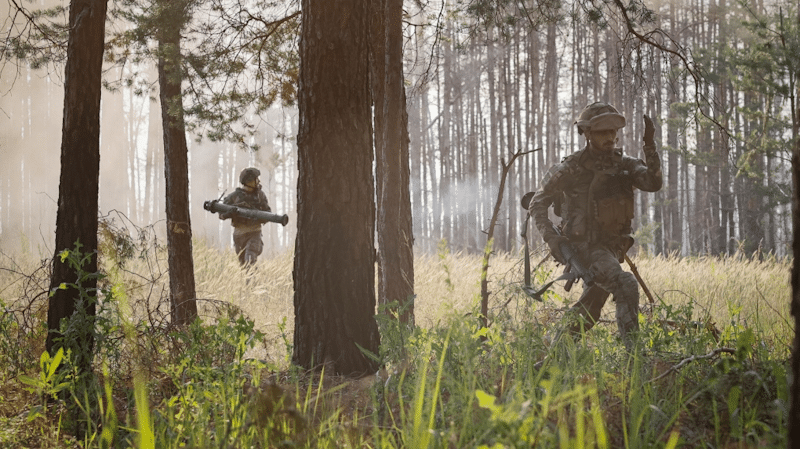
I’m running. Shells explode around me. Sometimes they roar like thunder; sometimes they whistle on approach. Large parts of the forest are on fire. Smoke rolls by like dry ice.

“Run. Run. Run,” says Dima. I follow him over the fallen trunks of trees felled by artillery; over shell craters that have become pools; through the deep grooves of old vehicle tracks. I’m slowing down now. My ill-fitting helmet is slick with sweat. Droplets sting my eyes.

Share

Putin knows his history: the end will be brutal and from within

Despite having the trappings of a functional constitution Russia remains an autocracy in which, from Peter the Great to Stalin, leaders either anoint their successors or are removed by bloody force

In the history of a nation famed for its blood-spattered successions, it was the most savage liquidation of an autocrat — and is ever in the mind of a history-obsessed Russian ruler who this week may be feeling the insecurity of a system in which the despot seems omnipotent but in which there is no orderly succession nor safe retirement and in which the jeopardy is intensified by his own merciless war. At midnight on March 23, 1801, Tsar Paul, successor and son of Catherine the Great, heard footsteps on the stair of his impregnable new residence, Mikhailovsky Castle. He did not have time to wonder how the assassins had gained access, nor how none of his multiple security agencies had reported the conspiracy, nor why this paradomaniacal military enthusiast was about to be challenged by his own elite officers.

Share

Did the Wagner Group have supporters within Russia’s army?

In the days since the brief revolt by the Wagner Group fighters and their leader, Yevgeny Prigozhin, Russian President Vladimir Putin has appeared in public several times, praising the Russian security forces as being “united” in their response and having prevented “civil war” in Russia.

But how were the fighters in the private military company able to take control of the southern military headquarters in Rostov-on-Don so easily, with little resistance? How did they occupy the air base in Millerovo, further north, and other military facilities along the route to Moscow, before stopping some 200 kilometers (125 miles) from the Russian capital? And did Prigozhin have support from within the Russian military?

Share

Trudeau government quietly escalated Canada’s involvement in crisis by extending our cyber defence umbrella to Ukraine, Latvia after Russian invasion: report

The Canadian government has quietly designated Ukraine and Latvia’s networks as “systems of importance,” extending the services of its cyber intelligence agency to cover the two eastern European countries.

According to the Communications Security Establishment’s annual report, Defence Minister Anita Anand signed two ministerial orders last year to bring the electronic information and network systems of Ukraine and Latvia under Canada’s defence umbrella.

The orders were signed on March 17, 2022, less than a month after Russia’s unprovoked invasion of Ukraine.

Share

Terry Glavin: All Trudeau had to do was stay on script on Russia. Guess what happened

In his consultations with NATO leaders and allies during the bubbling cavitation that trailed Russian warlord Yevgeny’s Prigozhin’s columns of tanks and troop carriers during that spectacular tantrum Prigozhin threw last weekend, U.S. President Joe Biden got it right: Stay on message, and for the love of God don’t say anything stupid.

Share

Putin Moves to Seize Control of Wagner’s Global Empire

In the hours after Yevgeny Prigozhin’s army of ex-convicts and mercenaries halted their advance on Moscow, the Kremlin set out to seize full control of the global empire built by the notorious military entrepreneur.

Russia’s deputy foreign minister flew to Damascus to personally deliver a message to Syrian President Bashar al-Assad : Wagner Group forces would no longer operate there independently. Senior Russian foreign ministry officials phoned the president of the Central African Republic, whose personal bodyguards include Wagner mercenaries, offering assurances that Saturday’s crisis wouldn’t derail Russia’s expansion into Africa. Government jets from Russia’s Ministry of Emergency Situations shuttled from Syria to Mali, another of Wagner’s key foreign outposts.

Share