‘We were all wrong’: how Germany got hooked on Russian energy

Germany has been forced to admit it was a terrible mistake to become so dependent on Russian oil and gas. So why did it happen?

On Sunday 1 February 1970, senior politicians and gas executives from Russia and Germany gathered at the upmarket Hotel Kaiserhof in Essen. They were there to celebrate the signing of a contract for the first major Russia-Germany gas pipeline, which was to run from Siberia to the West German border at Marktredwitz in Bavaria. The contract was the result of nine months of intense bargaining over the price of the gas, the cost of 1.2m tonnes of German pipes to be sold to Russia, and the credit terms offered to Moscow by a consortium of 17 German banks. Aware of the risk of Russia defaulting, the German banks’ chief financial negotiator, Friedrich Wilhelm Christians, took the precaution of asking for a loan from the federal government, explaining: “I don’t do any somersaults without a net, especially not on a trapeze.”

Share

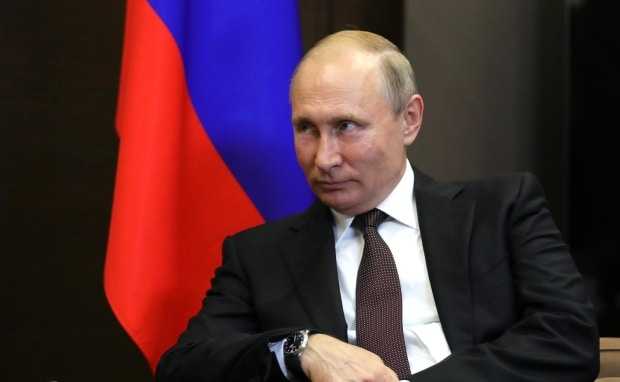
Putin Treated for Cancer in April, U.S. Intelligence Report Says

Vladimir Putin’s health is a subject of intense conversation inside the Biden administration after the intelligence community produced its fourth comprehensive assessment at the end of May. The classified U.S. report says Putin seems to have re-emerged after undergoing treatment in April for advanced cancer, three U.S. intelligence leaders who have read the reports tell Newsweek.

Share

Arms sent to Ukraine will end up in criminal hands, says Interpol chief

Weapons sent to Ukraine after Russia’s invasion in February will end up on the global hidden economy and in the hands of criminals, the head of Interpol has said.

Jürgen Stock says once the conflict ends, a wave of guns and heavy arms will flood the international market and he urged Interpol’s member states, especially those supplying weapons, to cooperate on arms tracing.

“Once the guns fall silent [in Ukraine], the illegal weapons will come. We know this from many other theatres of conflict. The criminals are even now, as we speak, focusing on them,” Stock said.

Share

Ukraine war: US to send longer-range rockets in latest aid package

The US will send Ukraine more advanced rocket systems to help it defend itself, President Biden has announced.

The weapons, long requested by Ukraine, are to help it strike enemy forces more precisely from a longer distance.

Until now, the US had refused the request out of fear the weapons could be used against targets in Russia.

Kremlin spokesman Dmitry Peskov said the US was “directly and intentionally adding fuel to the fire” with its weapons deliveries to Ukraine.


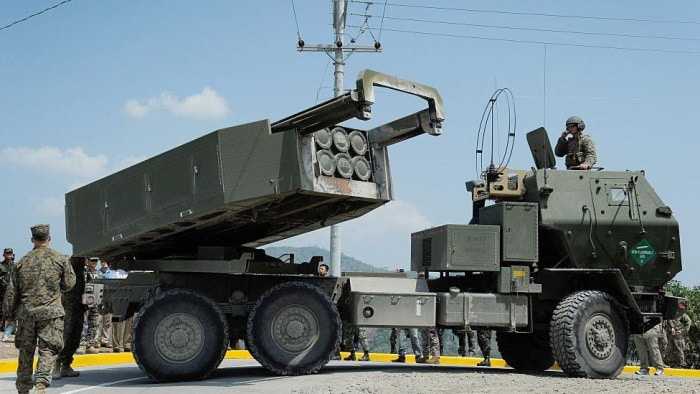
Himars: what are the advanced rockets US is sending Ukraine?

Joe Biden has announced the US will send advanced missile systems to Ukraine. The new weapon is the Himars multiple launch rocket system, or MLRS: a mobile unit that can simultaneously launch multiple precision-guided missiles.

Both Ukraine and Russia already operate MLRS, but Himars has superior range and precision.

Share

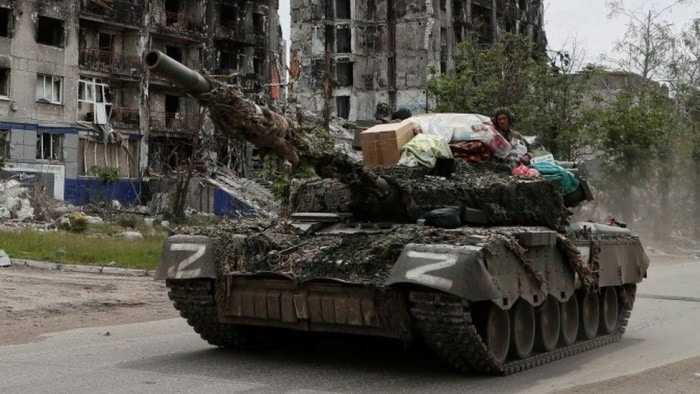
Ukrainian refugee from Popasna spots looted possessions on Russian tank

A Ukrainian refugee in the UK says she recognises items apparently looted from her house sitting on top of a Russian tank in a recent photo.

Alina Koreniuk says the box in the photo contains a new boiler she planned to install before the war started.

She and her children left Ukraine on 8 April and are staying with a British couple in Nottinghamshire.

Share

Ukraine: EU compromises on Russian oil ban, but clashes with Austria and Germany over gas

Austria and Germany have ruled out any European Union embargo on Russian gas imports after a Brussels summit agreed a partial oil ban last night.

Poland, Estonia, Latvia and Lithuania are already pushing to step up Russian energy sanctions to keep the pressure on President Putin, but the EU appears to have hit the political limit on gas imports.

Setting the scene for a new clash over sanctions, Karl Nehammer, the Austrian chancellor, said that there could be no question of suspending gas imports because of the effect on major European economies, such as Germany’s.

I guess the next step is to ship Ukraine half a rifle or half a grenade etc.

Share

Drone footage of Ukrainian soldier’s final heroic stand against Russian troops in trench

Drone footage shows troops desperately holding off the enemy’s advance with fighting compared to the First World War

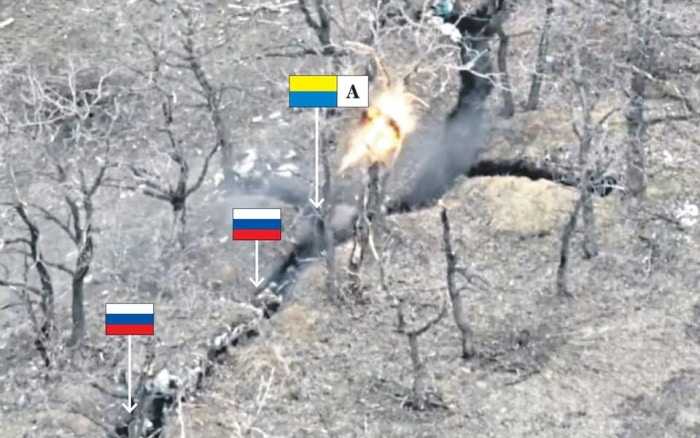
A lone Ukrainian soldier has been filmed making a last stand against a squad of Russian soldiers clearing out a trench system in the Donbas.

In four minutes of raw and desperate fighting filmed by drone, the soldier holds off the enemy long enough to give his unit precious minutes to escape.

The infantryman, at times mere inches from the Russian troops, fires shots around the corner of his position in a cut-out from the main trench and at one point hurls back a grenade moments before it explodes.

Share

Stop telling Ukraine to give up

It is not the West’s place to demand that Ukraine cede territory to Russia.

The dynamic of the war in Ukraine appears to have shifted in Russia’s favour. After retreating from the outskirts of Kyiv in April, the Russian army has since refocused its efforts on taking swathes of eastern Ukraine. To that end, the Kremlin has poured thousands of troops and hardware into the Donbas region, laying siege to key cities in its two provinces of Donetsk and Luhansk. Ukrainian officials have admitted this week that Russia now has the ‘upper hand’ in the Donbas. Serhiy Haidai, governor of Luhansk, estimated that as little as five per cent of his province was still under Ukrainian control – down from about 10 per cent a week ago.

Share

Germany has not sent promised large arms to Ukraine, leaked documents show

German broadsheet Welt says it has seen official papers that show Germany has not supplied any significant weapons to Ukraine for weeks

Germany has failed to provide any heavy weapons to Ukrainian forces in recent weeks and appears to be scaling back its military support in a break from Western policy, leaked documents have revealed.

German broadsheet Welt said it had seen official papers that showed Germany had not supplied any significant weapons to Ukraine since the end of March, despite vowing to grant its forces the weapons they need to repulse the Russian army.

In the nine weeks since the end of March Germany has made just two deliveries to Ukraine consisting of small arms.

In contrast with Western allies who are sending huge quantities of anti-tank and air defence weaponry such as NLAW launchers, as well as artillery, Germany has provided around 4,600 anti-tank mines.

Share

Russia: Lone Wolf of the Steppes

Whatever its outcome, the Russian war against Ukraine, now in its fourth month, is already studied by many analysts with emphasis on two issues. First, will it put an end to Vladimir Putin’s ambition to surround his Russia with autocratic regimes or “illiberal democracies”?

Of the 15 nations that emerged as independent entities after the fall of the Soviet Union, only three, the Baltic republics, have managed to build Western-style capitalist democracies, becoming full members of the European Union and the North Atlantic Treaty Organization (NATO). However, all three, annexed by Stalin, were never fully Sovietized.

I remember that during a visit to Latvia in August 1974, our “minder” from Moscow observed that Riga, the Latvian capital, was “almost like Europe.”

Share

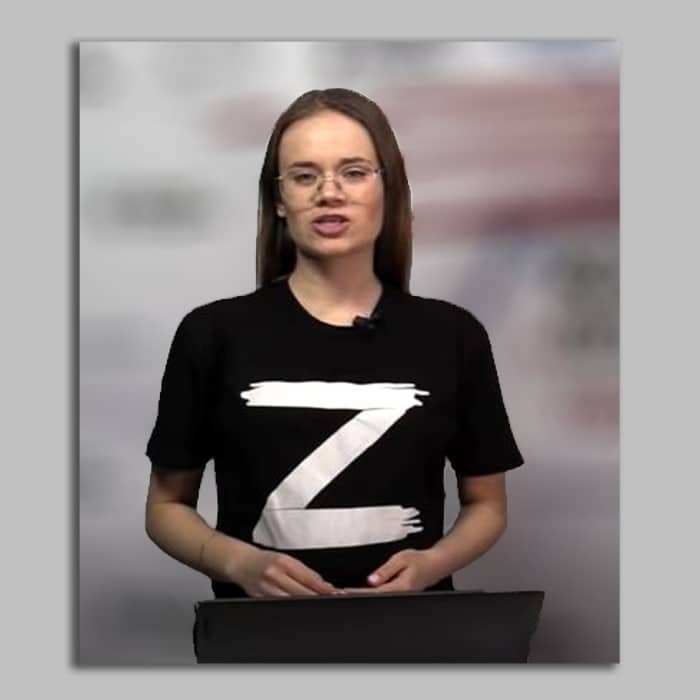
War in Ukraine: The making of a new Russian propaganda machine

The port city of Berdyansk had been occupied by Russian troops for less than a week, but a new pro-Kremlin online media outlet had already moved in.

The company, whose name translates as Southern Front, makes and distributes pro-Vladimir Putin propaganda across YouTube, social media app Telegram, and through a website that targets areas newly under Russian control.

The Southern Front news site posted its first message on day one of the Russian invasion of Ukraine, and now has several correspondents filing stories on a daily basis.

Share

Russia won’t use tactical nuclear weapons in Ukraine, says ambassador to UK

Russia’s ambassador to Britain has told the BBC he does not believe his country will use tactical nuclear weapons in the war against Ukraine.

Andrei Kelin said that according to Russian military rules, such weapons are not used in conflicts like this.

He also described allegations of war crimes in the town of Bucha as “a fabrication”.

Share