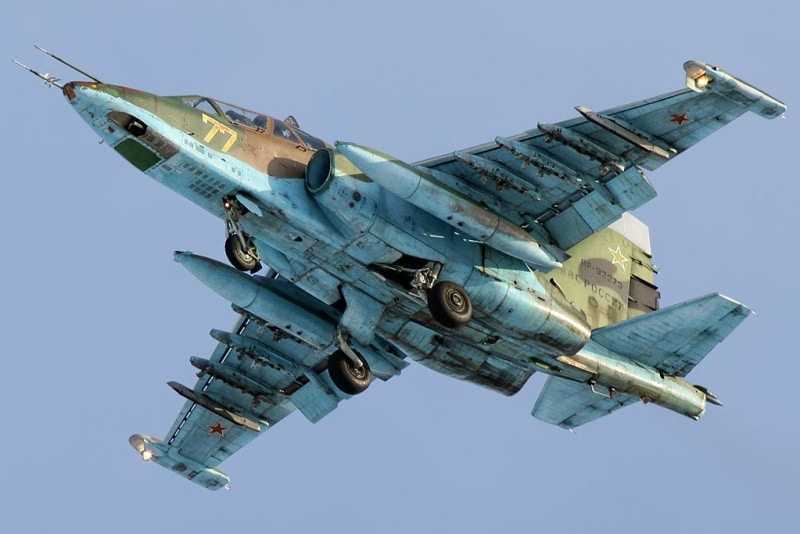
Why are pilots in Ukraine firing rockets so clumsily?

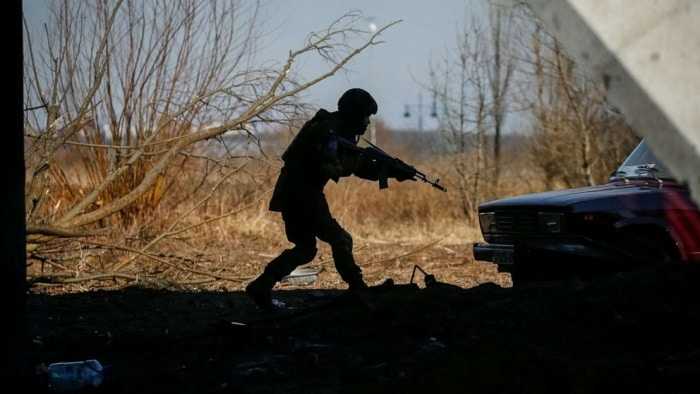
RUSSIAN and Ukrainian aircraft have adopted an unusual tactic for firing unguided rockets. Rather than launch them in pairs directly at a target on a downward angle, pilots tend to fly low before climbing and firing an entire pod of rockets steeply upwards, after which the pilot veers away. This clumsy approach, known as “lofting” or “tossing”, has some advantages, but points to a lack of modern weaponry on both sides.

The technique was originally developed by the American armed forces in the 1940s. To deliver an atomic bomb without having to fly directly over its target, aircraft would make a steep climb before releasing a bomb on an upwards trajectory. The plane would then break off sharply while the bomb continued, achieving the maximum range without catching the aircraft in the blast.

I think we’ve priced ourselves back to the future.

Share

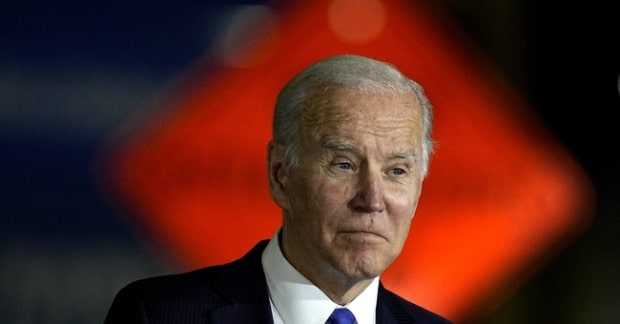
Biden dumps weapons into Ukraine

It could expand the war yet Congress has had no say

Over the last four months, the Biden administration has assured us that it is only sending “defensive weapons” to Ukraine. It’s a claim that’s become more difficult to believe as more sophisticated systems are announced seemingly every week that do not require further congressional approval.

Take the most recent example. The White House announced a fresh $1 billion last week for 18 more Howitzers, more long-range missiles for the HIMARS rocket systems announced earlier this month, and a new weapon, Harpoon anti-ship missiles. These are systems that can strike at the more than 20 Russian naval vessels accused of blockading Ukraine’s eastern ports.

Share

Will the Transatlantic Coalition Against Russia Hold?

It would be a mistake for U.S. policymakers to assume that European allies will continue to view it as in their best interests to follow Washington’s lead.

U.S. policymakers often point to the Western sanctions levied on Russia as evidence of a unified international response to the war in Ukraine. For example, when asked by a reporter last week about whether French president Emmanuel Macron’s peace overtures raised concerns that transatlantic unity could hold up “under pressure,” U.S. ambassador to the Organization for Security and Co-operation in Europe Michael Carpenter responded by pointing to the European Union’s (EU) six sanctions packages as evidence that there is “tremendous unity” with only “occasional differences on tactics.”

Share

Ukraine War Blows Up EU’s Superpower Delusion

The leaders of France, Germany and Italy have jointly visited Ukraine in an attempt to present a unified European front regarding the Russia-Ukraine war. The one-day visit was long on rhetoric but short on substance: European unity remains elusive.

When Russian President Vladimir Putin launched his invasion of Ukraine on February 24, the European Union responded the following day with a package of unprecedented economic sanctions aimed at isolating Russia.

Share

‘The impossible’: Ukraine’s secret, deadly rescue missions

KYIV, Ukraine (AP) — As was his habit before each flight, the veteran Ukrainian army pilot ran a hand along the fuselage of his Mi-8 helicopter, caressing the heavy transporter’s metal skin to bring luck to him and his crew.

They would need it. Their destination — a besieged steel mill in the brutalized city of Mariupol — was a death trap. Some other crews didn’t make it back alive.

Still, the mission was vital, even desperate. Ukrainian troops were pinned down, their supplies running low, their dead and injured stacking up. Their last-ditch stand at the Azovstal mill was a growing symbol of Ukraine’s defiance in the war against Russia. They could not be allowed to perish.


Ukraine detains senior public figures suspected of spying for Russia

KYIV, June 21 (Reuters) – Ukraine has detained a senior government official and a business leader suspected of being part of an alleged Russian spy network, the Security Service of Ukraine said on Tuesday.

The Security Service (SBU) did not name the two suspects but identified them as a senior official in the Secretariat of the Cabinet of Ministers and a department head at the Chamber of Commerce and Industry, a business lobby.


Share

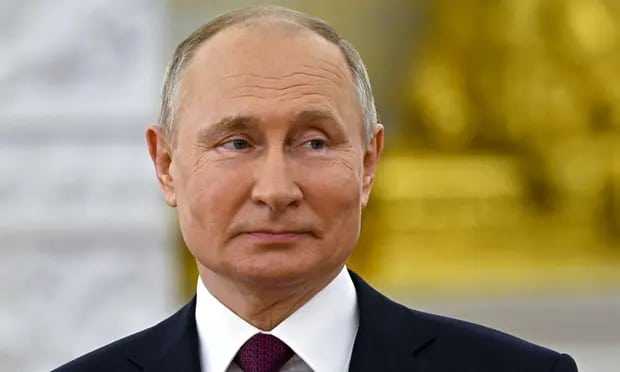
Russian emails appear to show ‘network’ holding $4.5bn assets linked to Putin

Palaces, yachts and vineyards reportedly provided to Vladimir Putin by friends and oligarchs can now be linked to what appears to be an informal network holding assets worth more than $4.5bn (£3.7bn).

A digital paper trail appears to suggest that an array of holiday homes and other assets reportedly used by the Russian president, which according to available records belong to or have been owned by separate individuals, companies and charities, are linked through a common email domain name, LLCInvest.ru.

Share

Russia claims 162 Canadian foreign fighters have been killed in Ukraine. There’s no evidence to back that up

Jordan Mullins doesn’t know exactly what hit him – he only remembers the pain he felt when shrapnel punctured his left calf.

Mr. Mullins, a 26-year-old from Oshawa, Ont., was fighting in Ukraine when his unit encountered a Russian armoured personnel carrier during a recent battle for a “coastal city” that Mr. Mullins prefers not to name. He said he and his unit – a volunteer formation known as the Georgian Legion, made up primarily of fighters from the country of Georgia – were “bounding across a street” when the Russians opened fire.

Share

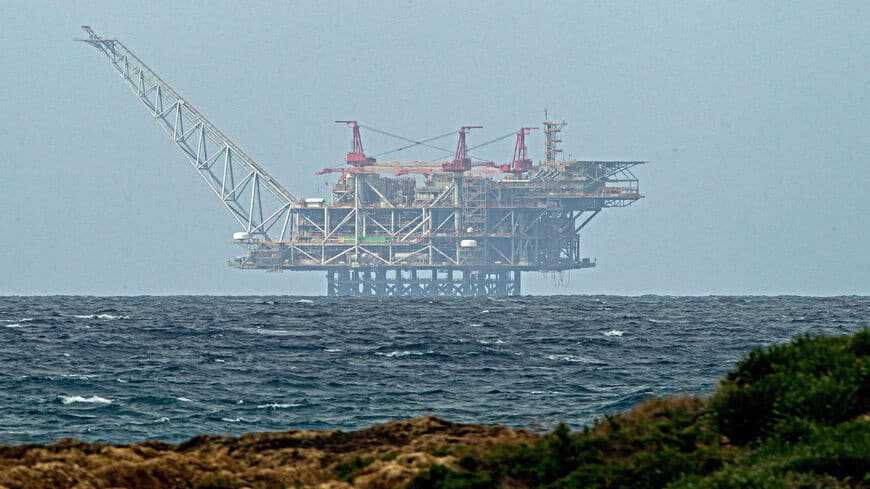
Israel exports fuel to Europe: Do you believe in miracles?

Please, they say, forget the past. We didn’t really mean all those nasty comments against the Jewish State.

The joke used to be…why did the Almighty give the Jews a Land flowing with milk and honey? Why not gas and oil?

To the astonishment of nearly everyone over a period of some 2,000 years, turns out He did! Let there be gas, He said, and there was gas.

But not so fast. First, people had to believe that this Good Earth could deliver petroleum. There was no history of this for a Land thought to be fuel dry since Creation.

Share

Russia is running out of soldiers

Nearly four months into the invasion of Ukraine, the Russian army is reportedly in rough shape. They have been sustaining withering losses on the battlefield and the military is struggling to find replacements for losses that now number in the tens of thousands. Vladimir Putin has been offering all sorts of incentives to get more people into uniform, but they are still operating under “peacetime” military rules and it hasn’t proven easy.

Share

Crimes against civilians: documenting the scale of abuse in Ukraine

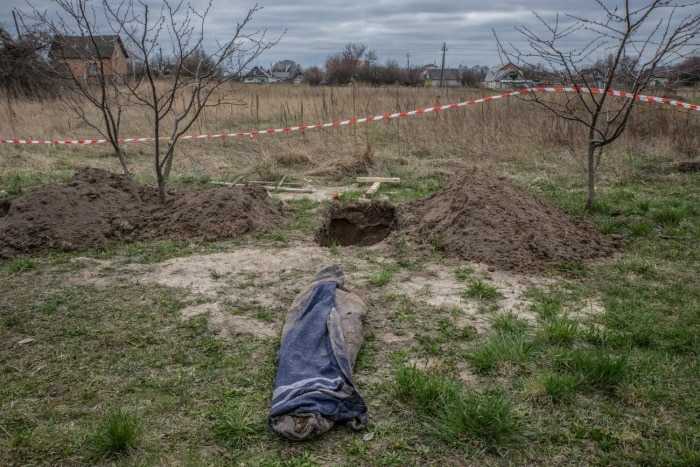
Five days into the war, a Russian platoon commander and his unit arrived in Motyzhyn, just off the main highway linking western Ukraine to Kyiv. They hid tanks and artillery among the trees, excavated foxholes and commandeered the nearest houses. One became the officers’ quarters, a second a base for jailing, torturing and murdering civilians.

The commander – Oleg Krikunov, 33 – was better known to his troops and victims by the nom de guerre Kaluga. The horrors he allegedly perpetrated and presided over for a month in one small village in Ukraine have been catalogued by officials investigating atrocities carried out by Moscow’s troops, who have designated him a high priority on their list of wanted soldiers.

Share

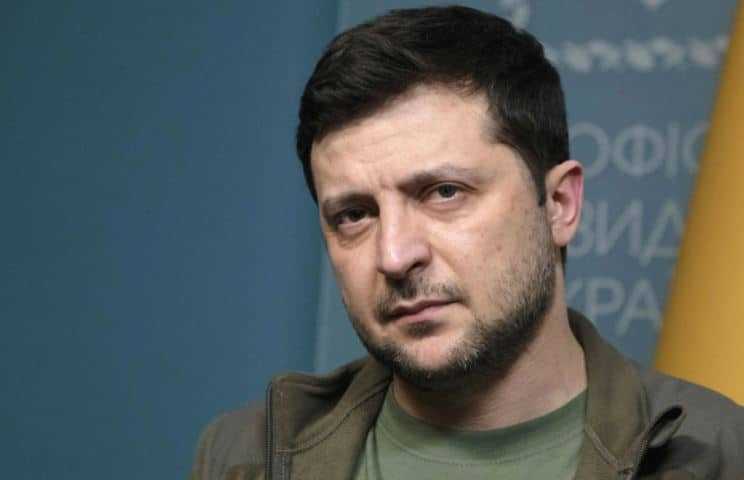
Zelenskiy warns Europe at risk of Russian hostilities over EU candidacy

Ukraine’s president, Volodymyr Zelenskiy, has predicted Russia will intensify its attacks this week, warning European partners that they too should be prepared for an increase in hostilities as Kyiv awaits a decision on its bid to join the EU.

The caution follows a European Commission recommendation to grant Kyiv candidate status to join – a diplomatic blow to Moscow.

“Tomorrow a historic week begins,” Zelenskiy said in a video address on Sunday night, adding: “There have been few such fateful decisions for Ukraine.

Share

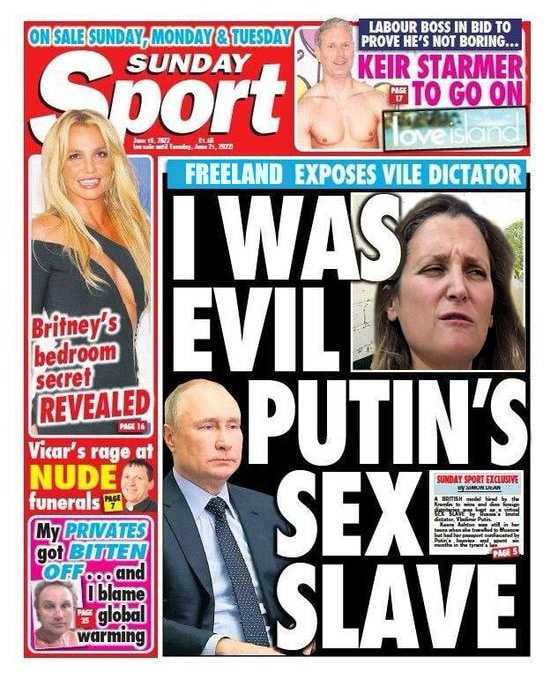
Freeland, Yellen to present united front on Ukraine and inflation

U.S. Treasury Secretary Janet Yellen will meet with Canadian Finance Minister Chrystia Freeland in Toronto on Monday where they will discuss the Ukraine war and joint efforts to deal with the food and fuel price inflation it is causing.

The Treasury said that Yellen during the visit will highlight strong economic ties between the two North American allies, visiting a business incubator and participating in a public forum at the University of Toronto.

Share

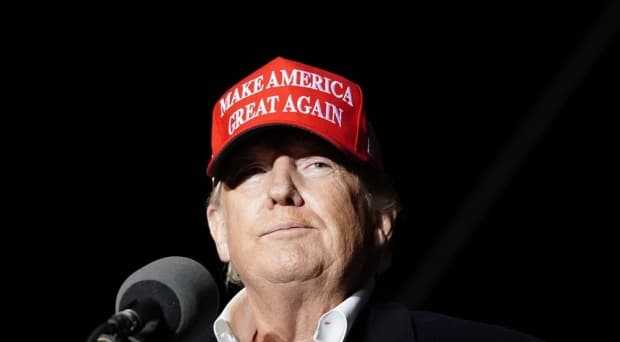
Donald Trump Is Magnificently Right About Ukraine

“… Now we have the nastiest inflation that we’ve ever seen, we have a war in Ukraine with perhaps millions and millions of people dying in the end…you’re talking about tens of thousands of people dying…and perhaps it’s going to lead to World War III because of the way we’re handling it… We just gave $40 billion on top of another $16 billion, so we’re in for $56 billion…we want to help those people—we have to also save our country, by the way—and it’s horrible, horrible what happened. But when you look at Europe, and Germany and France and all these other countries – they’ve given a tiny fraction of what we’ve given…It should have never happened. If I were president that would have never happened. One hundred percent, that would never have happened.”

Share

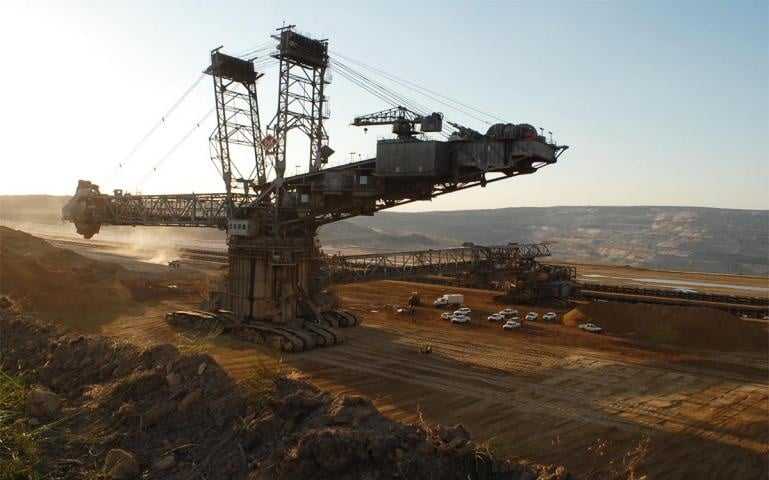
Germany to fire up coal plants as Russia turns down the gas

Germany must limit its use of gas for electricity production and prioritize the filling of storage facilities to compensate for a drop in supply from Russia, Economy Minister Robert Habeck said on Sunday.

In a move that goes against the principles of his environmentally-friendly Green Party, the country will also have to increase the burning of coal, Habeck said.

Russian gas company Gazprom announced last week that it was reducing supplies through the Nord Stream 1 pipeline for technical reasons, saying there had been delays in the repair of compressor turbines by the German company Siemens Energy.

Share

Might Vladimir Putin use a nuclear weapon? The calculations are changing

The nuclear bluster and threats from many of those connected to Russia’s invasion of Ukraine have, at times, been bone-chilling.

“The horsemen of the apocalypse” are on their way, Dmitry Medvedev warned this past week. The former Russian president, whom many European countries once considered to be relatively friendly to the West, had days earlier condemned the leaders of those same countries, vowing to “do everything to make them disappear.”

But as President Vladimir Putin’s invasion of Ukraine reaches the four-month mark, there have also been notable shifts in how both sides may be assessing the so-called nuclear “red lines.”

Share