Where the Grass Is Grayer

In New York and elsewhere, the illegal pot market is crowding out the legal one

In December 2022, the first licensed sellers of marijuana in New York State opened their doors. That might surprise New Yorkers who saw, to their delight or dismay, hundreds of smoke shops begin selling weed out of neighborhood storefronts last year. These unlicensed, “gray-market” operations may strangle the Empire State’s legal marijuana industry in its crib, thwarting politicians’ ambitions of advancing racial equity via drug legalization.

Share

How the marijuana ‘green rush’ fell apart

A cannabis glut in several states has depressed prices for legal pot, pushing small businesses into turmoil.

It wasn’t always Josh Keats’s job to drive the tractor.

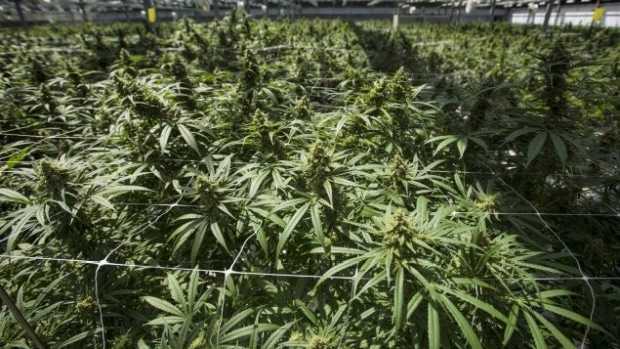
The co-founder of Henry’s Original once had a small crew to farm his 7-plus acres of cannabis from his base in Northern California’s Emerald Triangle. But on this fall day, it’s Keats operating the heavy machinery, trundling down rows of rich green stalks, because he had to let go two-thirds of his staff to stay afloat.

Yet, he’s grateful. Other weed growers, processors and retailers have had to make more painful cuts — or have folded altogether. “We are witnessing massive insolvency,” Keats said, “especially on the West Coast.”

Share

Canada must help legal cannabis sector compete with the illicit market, experts say

The federal government’s ongoing review of the Cannabis Act emphasizes protecting public health — but experts and industry insiders say it also has to find a way to boost the legal marijuana industry and help it compete with the illicit market.

The act, which legalized recreational marijuana in Canada in 2018, came with a requirement that the federal government review it three years after it became law.

Share

The real reason why there are two marijuana stores on every block

Currently, approximately 1,500 cannabis stores are open or approved in Ontario, 450 in British Columbia and 760 in Alberta (these being the three most populous provinces that have privatized cannabis retail operations). In most cities, one might find two or more cannabis stores on the same block, at the same intersection or within the same plaza.

People often express confusion about, or even resentment toward, this concentration of cannabis stores, and wonder how any of them could make money, or why anybody would want to open one, or how this could have come about.

Share

Canadians have lost more than $131 billion investing in cannabis companies: firm

Canadians who invested in cannabis companies have lost more than $131 billion, according to data collected by law firm Miller Thomson, which calculated the total losses of 183 publicly traded and licenced cannabis producers.

It’s a staggering number that if broken down per capita would equate to each Canadian citizen losing about $43,000.

Larry Ellis, a lawyer with the firm, points out to CTV National News that he “doesn’t know of many Canadian investors who can afford to lose $40,000 individually.”

I see a potential class action lawsuit as legit operators were forced to close when they could not compete with illegal storefront operations that the gov has not acted against.

Share

Ontario’s licensed cannabis producers losing revenue to black market

Adult-use cannabis sales in Canada are in the weeds.

A report from the firm Ernst and Young, commissioned by the Cannabis Council of Canada, found licensed producers in Ontario saw their share of sales revenue fall to 60.8% in April 2022 from 74.2% in July 2019.

I don’t partake so have no idea about the quality or price offered by either side. Something says the street will win however.

Share

The New Weed Whackers

An exploding black market in states that legalized pot has sparked another government war on marijuana.

Californians who opened their voters’ guides to the state’s 2010 elections could read a pitch from backers of Proposition 19, an initiative designed to legalize the recreational use of marijuana. The argument: that “Prohibition [of marijuana] has created a violent criminal market run by international drug cartels.” The advocates promised that, “By controlling marijuana, Proposition 19 will help cut off funding to the cartels.” Though voters failed to approve Prop. 19 that year, advocates returned six years later with a more focused initiative, backed by a similar justification—in sum, that legalization “creates a safe, legal system for adult use of marijuana” in California. This time, voters agreed, and recreational pot use became legal in the state.

What a craphole…

Share

San Diego ER seeing up to 37 marijuana cases a day — mostly psychosis

Meg and Scott knew something was going on with their son Kyle when, during the pandemic, he began refusing to get out of bed to attend class online.

Up until then, Kyle had been like a dream son: tall, good-looking, strong, athletic, with a great sense of humor. He was such a good baseball player that talent scouts were checking him out, and had a decent chance of someday playing in the Major League.

“He had the world by the balls,” his dad said. (At the family’s request, The Post has used pseudonyms.)

Share

The Marijuana Myth

With the midterms bearing down and the post-George Floyd crime wave still underway, President Biden and his fellow Democrats face a dilemma: Continue hammering the theme that law enforcement is racist or position themselves as guardians of law and order?

Innate inclination won out again last week. Biden announced that he was pardoning all individuals who have ever been federally convicted of marijuana possession. His reason for doing so, Biden said, was to “right” the racial “wrongs” that the criminal justice system has allegedly perpetrated. “While white and Black and brown people use marijuana at similar rates, Black and brown people are arrested, prosecuted and convicted at disproportionately higher rates,” Biden said in a video.

Share

Four years after legalization, illegal cannabis market still thriving in Canada

While Canada marks four years of legal cannabis on Monday, industry observers are wondering why it’s taken so long for a legal, government-regulated weed marketplace to overtake the illicit market.

During the 2015 federal election campaign, cannabis legalization for the Trudeau Liberals was framed as a means to protect young people from an entrenched and dangerous criminal black market.

Share

Still much to iron out on fourth anniversary of Canada’s legalization of cannabis

Monday marks the fourth anniversary of the Canadian federal government’s legalization and regulation of cannabis for adults of legal age.

It was back on Oct. 17, 2018, when the production, distribution, sale, import and export, and possession of cannabis became legal in this country, a first for a G7 nation. A year later, cannabis edible products and concentrates became legal for sale as well.

I wonder if their estimates of the size of the illicit market are optimistic.

Share

Why our cannabis experiment failed

Illegal weed still outsells legal weed — and legitimate cannabis companies are struggling

Once cannabis legalization started being taken seriously a decade ago, the majority of liberal Americans supported it. It just seemed like common sense. No longer would pot users have to rely on street dealers, so criminal organizations would wither away. At the same time, states would benefit from billions in tax revenue. Booze, after all, was once held under the thumb of prohibition in the US, bringing about thirteen years of black market activity and gang violence, which all ended when prohibition was repealed in 1933. The alcohol trade is now one of the leading earners in America and contributes roughly $260 billion to the economy. Why would marijuana be any different?

Share

Amsterdam considers banning ‘cannabis tourists’ from its coffee shops

Fed up with stoned visitors and worried by hard-drug criminality, the mayor wants to clean up the city. But will it work?

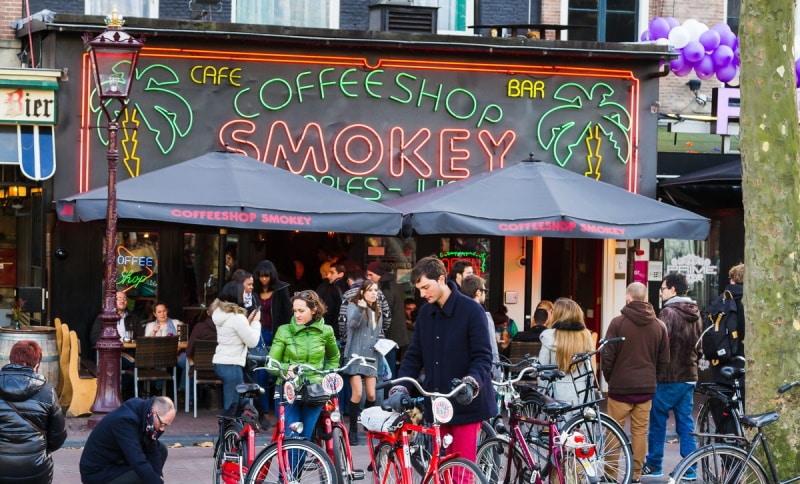
Strumming gently at a guitar, outside the “nicest” coffee shop in Amsterdam, French tourists Terry Novel and Manon Fouquet enjoy a quiet joint in the sun.

They have no idea of the dark cloud around them and the cannabis sector in Amsterdam. The council has just spent a day debating whether to ban tourists from cafes such as Coffeeshop The Rookies – where the state currently turns a blind eye to foreigners smoking weed and taxes the profits.

Share

Ontario made $520M from pot last year. So why do retailers say they’re struggling?

The province of Ontario made more than a half a billion dollars from the cannabis industry in the last fiscal year, according to public accounts released by the government on Friday.

But that $520 million is coming at least partially at the expense of struggling local retailers, according to Michael Armstrong, a business professor at Brock University in St. Catharines, Ont.

“About 56 cents of every dollar you spend at a cannabis store goes to the businesses, the retailers and producers,” Armstrong told CBC Toronto.

Share

How Weed Became the New OxyContin

Big Pharma and Big Tobacco are helping market high-potency, psychosis-inducing THC products as your mother’s ‘medical marijuana’

For 30 years, Dr. Libby Stuyt, a recently retired addiction psychiatrist in Pueblo, Colorado, treated patients with severe drug dependency. Typically, that meant alcohol, heroin, and methamphetamines. But about five years ago, she began to see something new.

“I started seeing people with the worst psychosis symptoms that I have ever seen,” she told me. “And the worst delusions I have ever seen.”

These cases were even more acute than what she’d seen from psychotic patients on meth. Some of the delusions were accompanied by “severe violence.” But these patients were coming up positive only for cannabis.

Share