Homeownership increased for recent immigrants in Canada and decreased for Canadian-born individuals: StatsCan

Homeownership increased for recent immigrants in Canada and decreased for Canadian-born individuals: StatsCan

Homeownership rates for recent immigrants in Canada grew recently, but it also decreased for Canadian-born individuals, according to a Statistics Canada study released Tuesday.

Homeownership in Ontario among recent immigrants in their fifth year in Canada rose by from 35.7 per cent in 2018 to 40.2 per cent in 2021, recording an increase of over 12 per cent. While Canadian-born individuals saw a five per cent decrease in homeownership rates for the same period from 50.7 per cent to 47.8 per cent.


I guess the Elbow people who voted for economic security wrecking mass immigration all have homes set aside for their children and grandchildren.

Share

CHARLEBOIS: Canada’s most wasteful generation? The answer may surprise you

CHARLEBOIS: Canada’s most wasteful generation? The answer may surprise you

Canadians often blame grocery stores, food manufacturers or governments for food waste. Yet much of the waste occurs in our own kitchens, often for one simple reason: We misunderstand food date labels.

New survey data from the Agri-Food Analytics Lab in partnership with Caddle, based on responses from 3,000 Canadians, reveal that the vast majority of households continue to throw away food once it passes its use-by date. While only 11% of Canadians said they always discard food after the date has passed, another 20% do so often and 37% do so sometimes. In other words, nearly seven in 10 Canadians allow date labels to influence their decision to dispose of food.

Share

Federal advocate warns Canada’s housing affordability crisis could take 1,000 years to fix

Federal advocate warns Canada’s housing affordability crisis could take 1,000 years to fix

A federal housing watchdog is warning that Canada is building affordable housing so slowly it could take more than 1,000 years to eliminate homelessness and restore affordability for the country’s poorest residents.

In her annual report to Parliament, Federal Housing Advocate Marie-Josée Houle said Canada faces a shortfall of 4.4 million affordable homes and needs a dramatic increase in public, non-profit and co-operative housing construction to address the crisis.

Share

‘Nobody has the right to own a home’

‘Nobody has the right to own a home’

Nobody has the right to own a home.

I can’t shake this comment from an Ottawa mandarin, made during an unguarded moment at a Bay Street event where it spilled into a casual conversation about affordable homes for families.

As Canadians do, I grinned, walked away with a drink in hand and stewed. What can families expect for the billions of taxpayer dollars being spent on housing by all levels of government?

Share

CHARLEBOIS: Ottawa’s food plan has promise, but it lacks a clear vision for competitiveness

CHARLEBOIS: Ottawa’s food plan has promise, but it lacks a clear vision for competitiveness

The federal government’s new National Food Security Strategy, valued at roughly $3.2 billion over ten years, is one of the most significant food policy announcements in recent memory. It signals that Ottawa finally recognizes what Canadians have been experiencing for years: food affordability matters, supply chains matter, and domestic food production matters.

Share

When private equity came for trailer parks

When private equity came for trailer parks

I’ve never been called “trailer trash”, but I did live in a trailer in Northeast Georgia in my early teens. Trailers don’t have the best reputation, but I liked it better than the home I grew up in. It was well-insulated, with a shotgun floor plan, so my room was far from my mother’s and her boyfriend’s, giving me more privacy than when we’d shared a wall (Iggy Pop, who lived with his parents in a trailer in Ypsilanti, Michigan, felt differently, and tells how he used to draw pictures of fantastical, u-shaped trailers where a boy would have space to hide). There was a hill I could skate down, woods to walk through, and because we were parked over gravel rather than dirt, we didn’t have as many problems with bugs. I had lived in a typical postwar suburb where neighbors were suspicious of each other and maintained a degree of distance. The trailer park, by contrast, was cozy; people knew each other and waved hello. I remember having long talks with a man there who owned four beautifully restored Ford Mustangs from the Sixties.

Share

Seniors are the largest, fastest-growing homeless population in Canada. It’s a collective shame upon our country

Seniors are the largest, fastest-growing homeless population in Canada. It’s a collective shame upon our country

The belief that mental illnesses are the main driver of rising homelessness is noticeably widespread, and is prompting governments across Canada to expand involuntary commitment as a purported “solution.”

This belief, though, is not promoted by experts on homelessness so much as by influential proponents of more funding for mental health services and involuntary commitment, such as the British Columbia Schizophrenia Society, and by governments themselves, dodging responsibility for failed economic policies. In fact, the belief is heavily based on misleading claims and dubious data. Worse, it’s hindering us from fully recognizing and discussing – let alone helping – the people who are actually the fastest-growing demographic of unhoused Canadians. And if we don’t start seeing more clearly and investing in real solutions, this latter group could soon overwhelm the country’s already stretched support systems.

Share

Canadians Spend More on Taxes Than Food. A Lot More.

Canadians Spend More on Taxes Than Food. A Lot More.

Every year, Canadians debate food prices. Grocery bills have become a national obsession, and for good reason. Food is one of the few expenses households face every single week. Consumers see the impact immediately when beef, tomatoes, or dairy products become more expensive.

But this week offers an opportunity to put food affordability into perspective, as the newly installed Governor General, Louise Arbour would say.

Share

Toronto child poverty rates rise for third straight year: ‘How can it be acceptable?’

Toronto child poverty rates rise for third straight year: ‘How can it be acceptable?’

Sharma Queiser has researched the social issues that Torontonians face for more than a decade, authoring reports that aim to raise awareness and improve lives.

Every few years, she’s been part of the team that puts together a report card on child and family poverty for Social Planning Toronto.

But co-authoring the report this time was different for her. It’s the first time the report has come out since she became a parent. The team found that for the third consecutive year, child poverty rates have risen in Toronto, disproportionately affecting families who are immigrants, racialized or have a single parent in their households.


This article suggests Canada do a better job crafting a beneficial to citizens immigration policy rather than using it to feed a vote buying machine.

Share

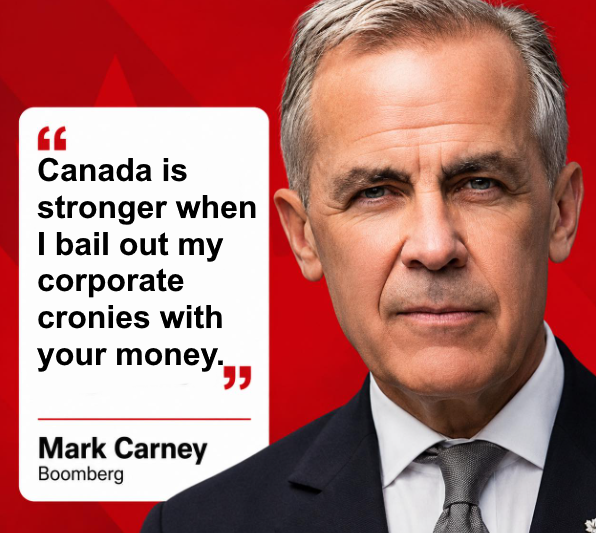
Canadians react to Mark Carney’s food and groceries ‘fake’ benefit video

Canadians react to Mark Carney’s food and groceries ‘fake’ benefit video

On Friday, Prime Minister Mark Carney shared a video of himself, his wife Diana Fox Carney, and other local Members of Parliament at a discount grocery store in Brampton to promote the launch of the Canada Groceries and Essentials Benefit.

Or as the Toronto Sun’s Brian Lilley put it, “celebrate his government’s total failure on affordability.”

His wife wore Chanel?

(more…)

Share

Nearly one in 10 Toronto mortgage holders won’t qualify to refinance next year

Nearly one in 10 Toronto mortgage holders won’t qualify to refinance next year

Toronto homeowners remain some of the country’s most vulnerable borrowers, according to a recent Bank of Canada report. The new study estimates that roughly nine per cent of Torontonians with mortgages won’t qualify for refinancing next year—more than double the percentage of Canadians as a whole.

Share

LILLEY: Mark Carney’s grocery payment an admission Canada’s economy is failing

LILLEY: Mark Carney’s grocery payment an admission Canada’s economy is failing

Mark Carney visited a Brampton grocery store Friday to celebrate his government’s total failure on affordability.

The Prime Minister was there to promote the first payment of the new Groceries and Essentials Benefit program, essentially, the rejigged GST rebate.

Now, Carney’s supporters may say this is a victory, it is the government helping low income Canadians.

Share

Canadian Banks Hold Fewest Mortgages Since 2020, Arrears Near Decade High

Canadian Banks Hold Fewest Mortgages Since 2020, Arrears Near Decade High

Canadian banks aren’t just seeing delinquencies rise—they’re losing market share. Canadian Bankers Association (CBA) data shows the arrears rate was unchanged in March. Delinquent mortgages stalled at one of the highest levels in a decade, after doubling from 2022 lows. However, the big story last month was the drop in the number of mortgages held by banks, now approaching a 6-year low.

Share

Food Banks Canada says employment insurance doesn’t serve modern workforce

Food Banks Canada says Canada’s employment insurance no longer serves the broader and shifting workforce as more people take up gig work or part-time jobs.

In its latest poverty report card, the organization says the labour market has shifted toward part-time, temporary and contract work, while EI only caters to a shrinking workforce that has stable, full-time work with a single employer.

Share