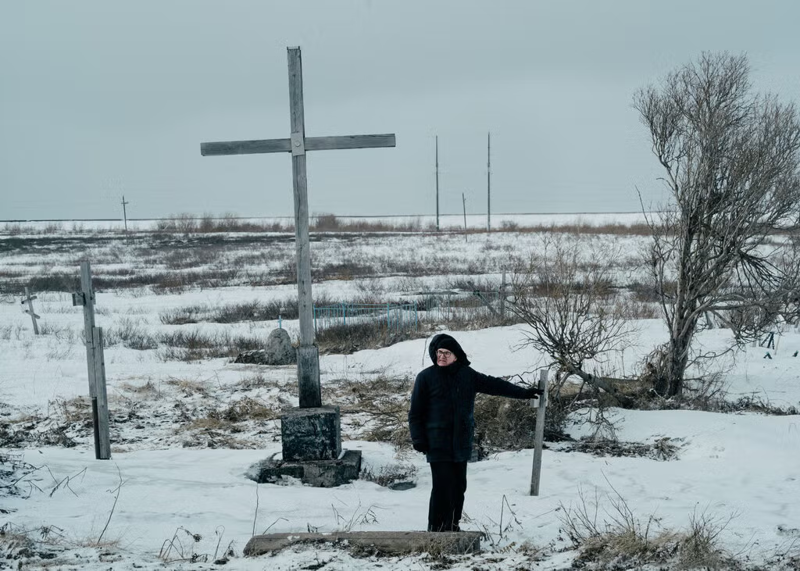
Mikhail R. Smiryaka has lived all his life in a desolate outpost of the Russian Arctic because eight decades ago his grandfather was branded an “enemy of the people” and taken to toil in Stalin’s Gulag.
When he was a child, his family’s kitchen was the only place considered safe for frank conversations about the state repression that sent his grandfather to a brutal labor camp nearby, after his wife stole grain during a famine after World War II.
Mr. Smiryaka, 52, said his mother taught him that everything around him — the coal mines surrounding the nearby city of Vorkuta like numbers on a clock, the municipal institutions, even the theater — was “built on the bones of prisoners.”
