
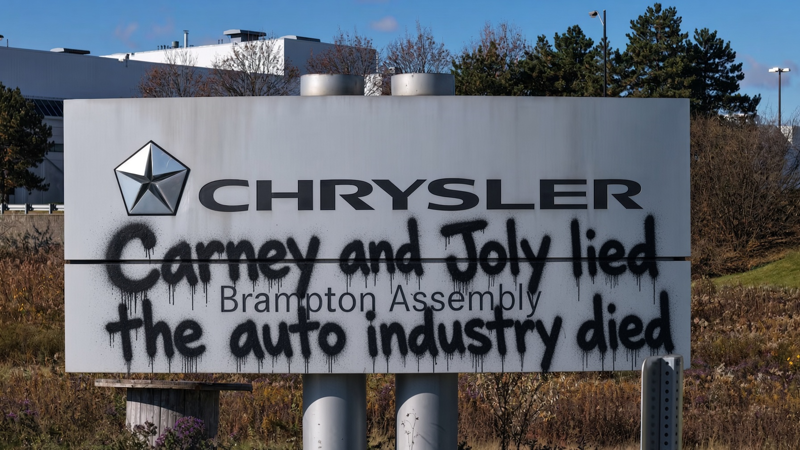
For the roughly 3,000 Unifor members laid off since Stellantis idled its Brampton assembly plant in December 2023, the automaker’s announcement that it is selling the facility to armoured-vehicle manufacturer Roshel is a gut punch. After years of promises that the plant would be retooled for a new model, frustration that Stellantis is abandoning the plant and its workers is entirely justified.
Can’t imagine how this got published in The Star.
Ian Lee drops a clear-eyed masterclass on the Stellantis Brampton plant, Canada’s auto industry, and the looming trade cliff
Stellantis is bleeding money with massive surplus capacity, Canada’s auto output has collapsed from ~2.5 million vehicles to 1.3 million, and the industry has long been losing ground to Mexico. Without genuine tariff-free access to the U.S. market, the economics simply don’t work
Lee is blunt that open-ended subsidies are a dead end — better to redeploy resources toward Canada’s real comparative advantages (critical minerals, value-added processing, natural resources) where global demand is actually strong
On the interim Canada-U.S. deal, he’s equally direct: the “elbows up” slogan was never a strategy, and the January 1 tariff shock will hit Canadian exporters hard. Reality is finally setting in in Ottawa
“[Stellantis] has 40% surplus capacity in its plants in North America and in Europe. They have way too many plants or productive capacity relative to the demand for their cars. So either they don’t have enough sales or they have way too many plants.”
“This elbows up as if it’s some kind of a hockey game. This is not a hockey game and it’s a slogan. It’s not a policy or a strategy. … those tariffs are going to kick in on January 1st. … we’ve got to an interim deal before the end of the year before those tariffs kick in and cause such enormous destruction to people that are exporting to the states.”
Numbers over narratives. Reality over slogans @SprottSchool
— _cbcwatcher_ (@cbcwatcher) November 22, 2026
