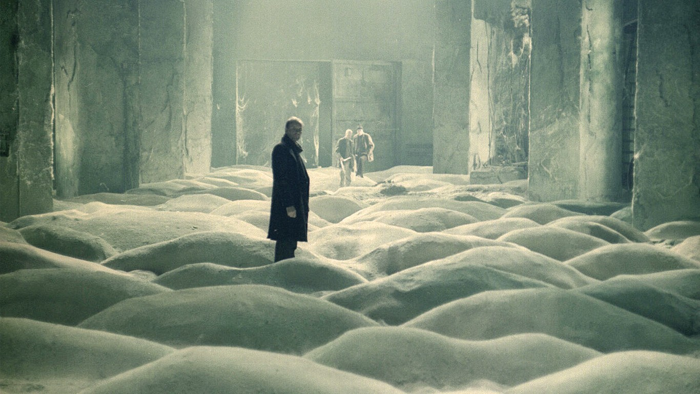
In Tarkovsky’s 1972 film Solaris, the cosmonauts orbiting a cold and sentient ocean planet have filled their futuristic space station with a clutter of homely, earthly things. A copy, or perhaps the original, of Breugel’s The Hunters in the Snow hangs in their wood-panelled, candlelit library, with its dogs and birds and trees, and peasants skating on the ice and woodsmoke curling from the brick chimneys. In the Armenian cosmonaut’s cabin, Caucasian rugs and daggers and photographs of medieval monasteries outcompete his scientific instruments for space. Tarkovsky’s vision of the future was of a desperate grasping onto a rooted human past. Like the Soviet Union’s rearguard defence of 19th-century bourgeois European high culture, the effort proves futile: though knowing it is not real, the film’s protagonist Kelvin surrenders himself to the simulacrum of his family dacha in the forest, and of his dead wife and father, produced by the alien intelligence.
Why tech bros disdain humanity